When I take my own point of view, I strongly feel that people should be able to legally do whatever they want as long as they aren't violating the rights of others. Some of my friends think that this intuition justifies a principle of absolute individual autonomy. According to such a principle, laws against driving without a seatbelt, the purchase of drugs like heroin, and medically-assisted-suicide are all unjustified.
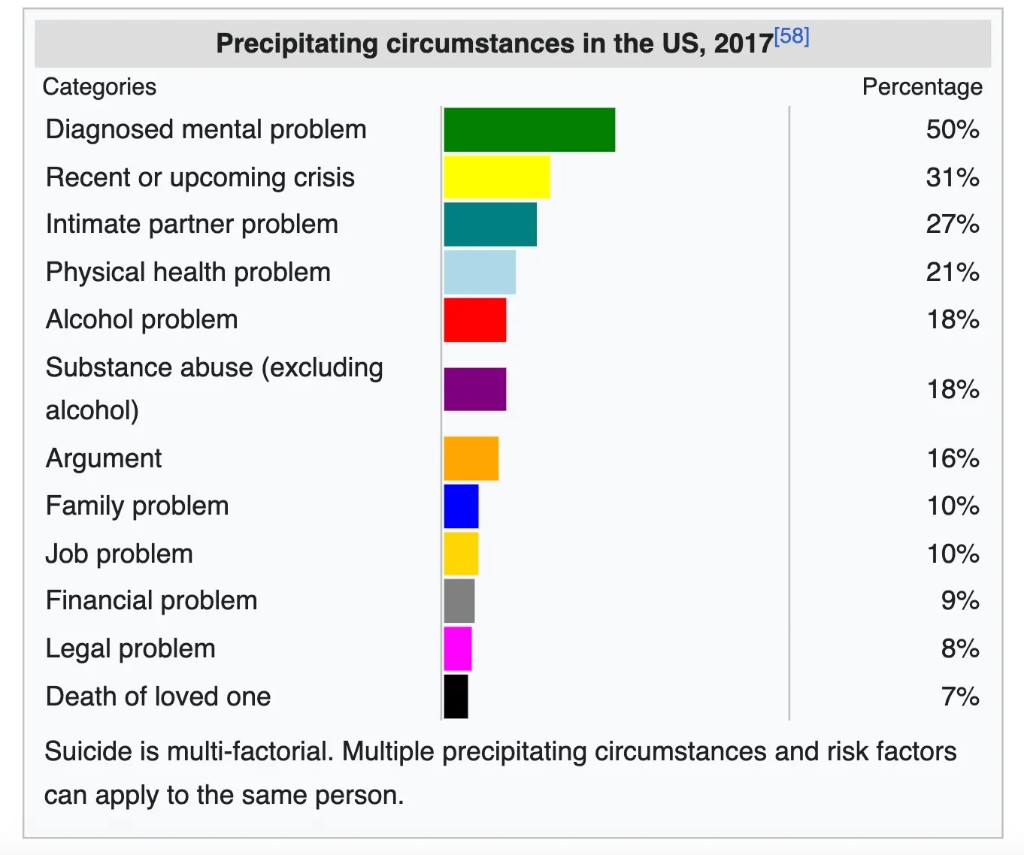
When I take a broader point of view, such a strong principle feels wrong to me. If people are systematically mistaken in their judgements about a certain action, the government should be able to correct these judgements using the law, and protect people from their own decision-making. The most serious example of judgements that are systematically incorrect are regarding suicide: most people who survive an attempt at suicide come to regret their attempt (see here). These survivors report being overwhelmed by temporary crisis, and experiencing "tunnel vision," or a sudden inability to distance themselves from their immediate circumstances.
The twin values of freedom and welfare seem to conflict. I take both values seriously. When I focus on one, it seems to easily win out over the other.
Many try, in response, to identify the exact conditions under which the government is justified in enforcing a paternalistic law. In doing this, they often assume that the action in question should have the same legal status for everybody. Instead, people should be able to decide for themselves whether a purportedly self-destructive action is legal or illegal for them to do.
When people take a certain action, some of their lives improve as a result, while others' get worse. We tend to consider a paternalistic law against this action justified when it is sufficiently more important to prevent harm to the latter group than allow the corresponding benefits for the former group. However, the fact that people in the first group would be excluded from a choice that would improve their lives is a legitimate cost. And it would be better to avoid this cost, other things being equal.

A system of voluntary paternalism is one in which citizens select which paternalistic constraints they would like to apply to them, far in advance. The choice to make a dangerous behavior legal would only go into effect after substantial time has passed -- enough time for the person to change their mind, and nullify their previous choice.
Note: for the rest of the post, we implicitly quantify over people who would take the action if it were completely legal, writing just "people" for short.
Voluntary paternalism offers an improvement over traditional paternalism, if two conditions are met:
If an action satisfies these two conditions, then a system of voluntary paternalism would, like traditional paternalism, prevent most of the people who would be harming themselves by taking the action from doing so. However, unlike traditional paternalism, voluntary paternalism would not prevent those who would benefit from taking the action from choosing to do so (for the most part).

I should note that the idea of voluntary paternalism is not a completely new one, and has in fact already been implemented in some states, through what are called Ulysses pacts. According to the American Foundation for Suicide Prevention, some states allow you to voluntarily make it illegal to sell you firearms.
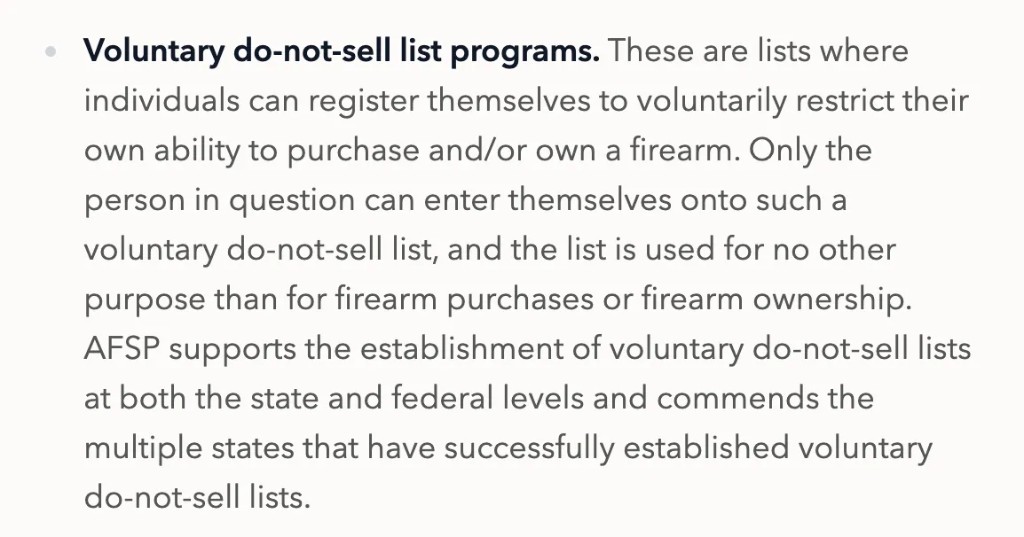
Not every paternalistic constraint should be replaced with a Ulysses pact. Indeed, justifying voluntary paternalism involved assuming that conditions (i) and (ii) were first satisfied. But why would (ii) be satisfied? If people are willing to harm themselves by taking an action, would they choose to make that action illegal?
The answer to this question is yes, if these people engage in the given behavior during moments of weakness, against their better judgement. And indeed, many instances of self-destructive behavior are instances not of ignorance but of weakness: examples range from not wearing a seatbelt out of laziness to relapsing on a hard drug after a bad day.
With this in mind, we can roughly describe properties of actions for which (i) and (ii) are likely to hold:
More concisely, (i) and (ii) depend on how accurately people assess the effects of various choices for their own life, when they are removed from situations where they must make an immediate decision. The two conditions are satisfied when these assessments are typically accurate.
And in such cases, a system of voluntary paternalism allows you to promote your own interests just by forming a correct belief about what it is better to do, rather than having to either break the law (if the action is completely illegal and you believe you should do it), or summon the willpower to always act on it (if the action is completely legal and you believe you shouldn't).
The system I've proposed makes the law more complicated to enforce, so there is a presumptive disadvantage it must overcome to be justified. But the current system is also very bad.
I watched a video a while ago of a Taliban general saying that the legal enforcement of modesty codes helps women, by protecting them from sexual violence. More generally, oppressive governments have often enforced terrible laws with paternalistic justifications.
One similarly terrible law is already in effect in the United States. This law makes it illegal to help somebody end their life, even if they have a chronic psychiatric condition or a terminal illness. But, on the other hand, it would be excessively permissive to allow lethal drugs to be sold over-the-counter. Liberalizing assisted-suicide for people in chronic mental or physical pain and preventing the suicide of somebody who has had a really bad day are equally pressing and serious priorities. If the foregoing argument is correct, there should be an option that makes it legal to sell you lethal drugs or otherwise assist in your death. Competing values require these sorts of compromises.
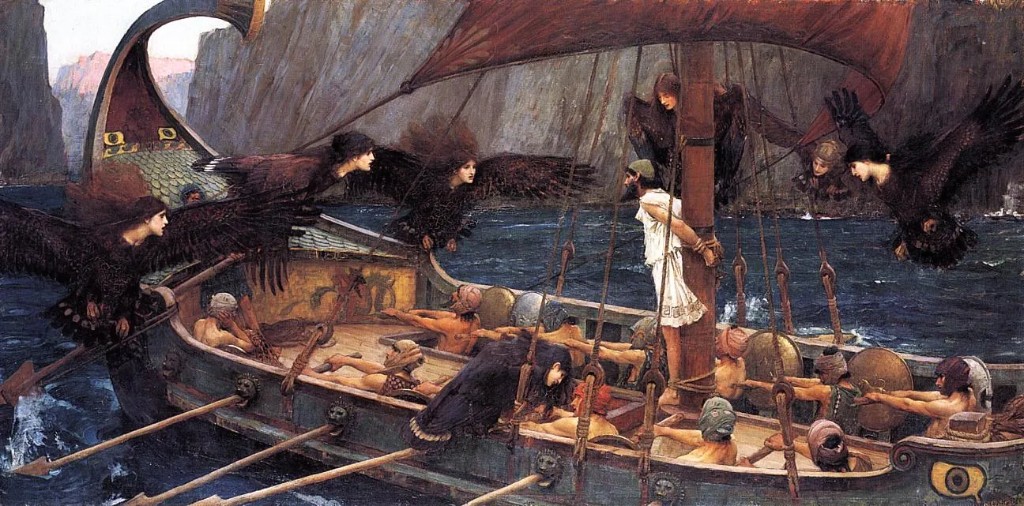
Addendum: I have recently discovered, and started reading, a book by Norwegian philosopher Jon Elster called Ulysses and the Sirens. This book explores mathematical formalizations of so-called "weakness of will," and constraints voluntarily chosen by one's past self. However, it appears that Elster refrains from analyzing this issue from a legal and political point of view, and so my idea (hopefully) remains novel. I did not know of this book when I first wrote this post; however, my idea did draw inspiration from Derek Parfit's Reasons and Persons, which discusses at length acting in one way now to influence your choices in the future.